Post Office Building
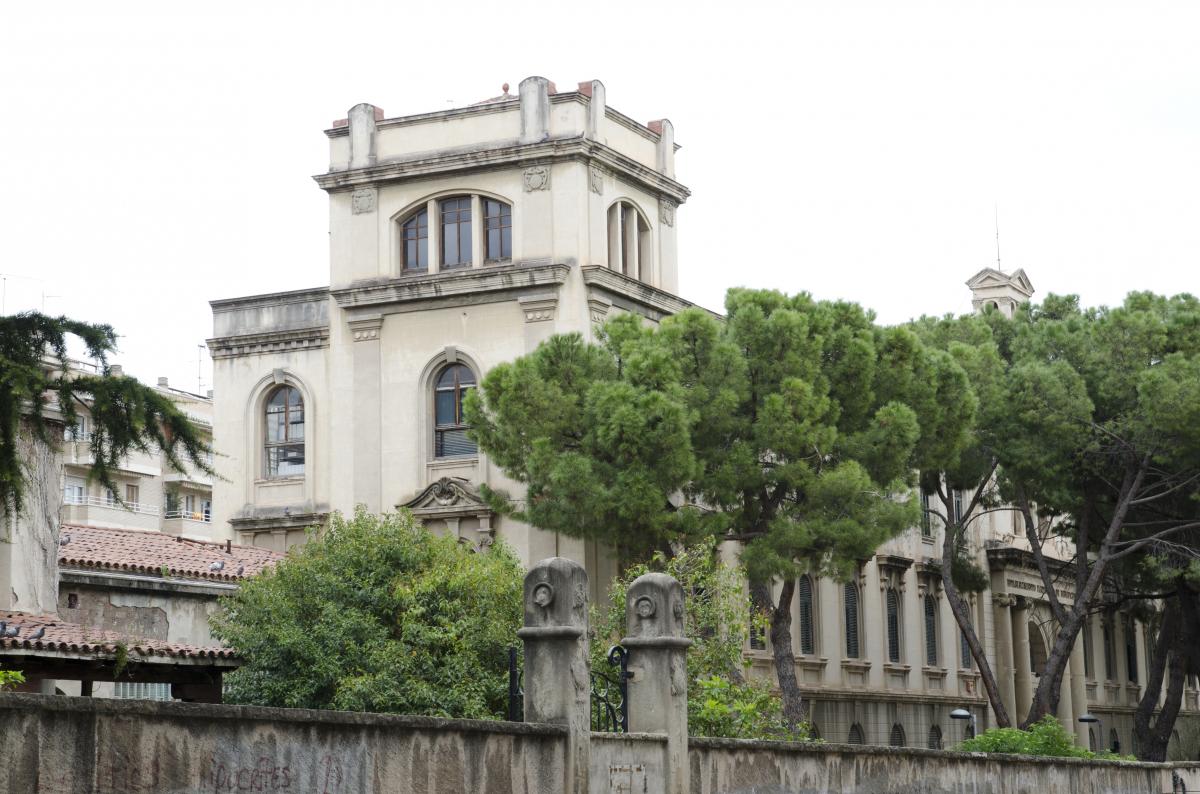
Spain Square is the development of an old industrial area that unifies Pere III promenade in a stretch built practically after the Spanish Civil War, although there are earlier buildings such as the Secondary Education Institute (currently, Lluís de Peguera Institute). It is characterized by open spaces with buildings of relatively low height, typical of mid-20th-century urban planning, such as the park that makes up Spain Square. Most of the buildings in this stretch of Pere III promenade date from the late 20th century because they replace former industrial spaces such as the large factory of the Textile Metallurgical Company.
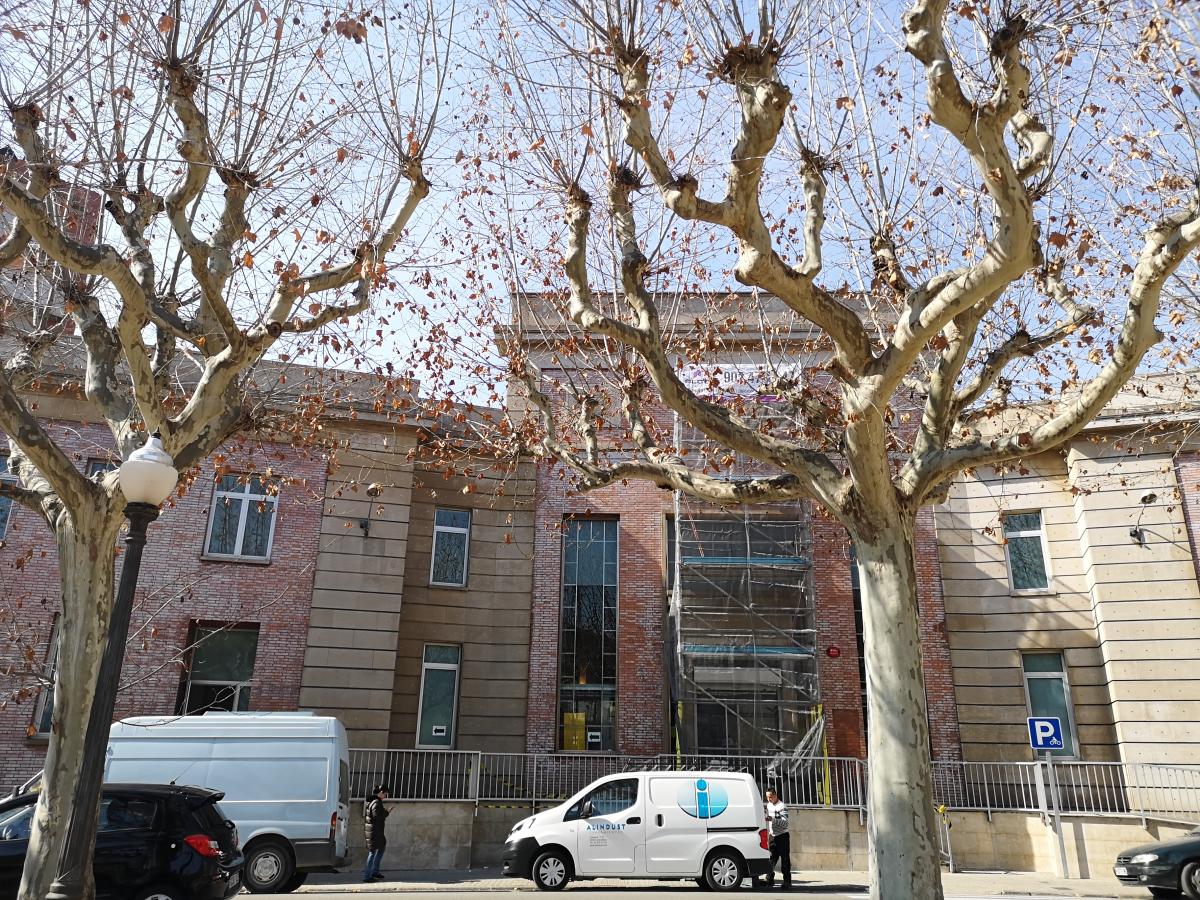
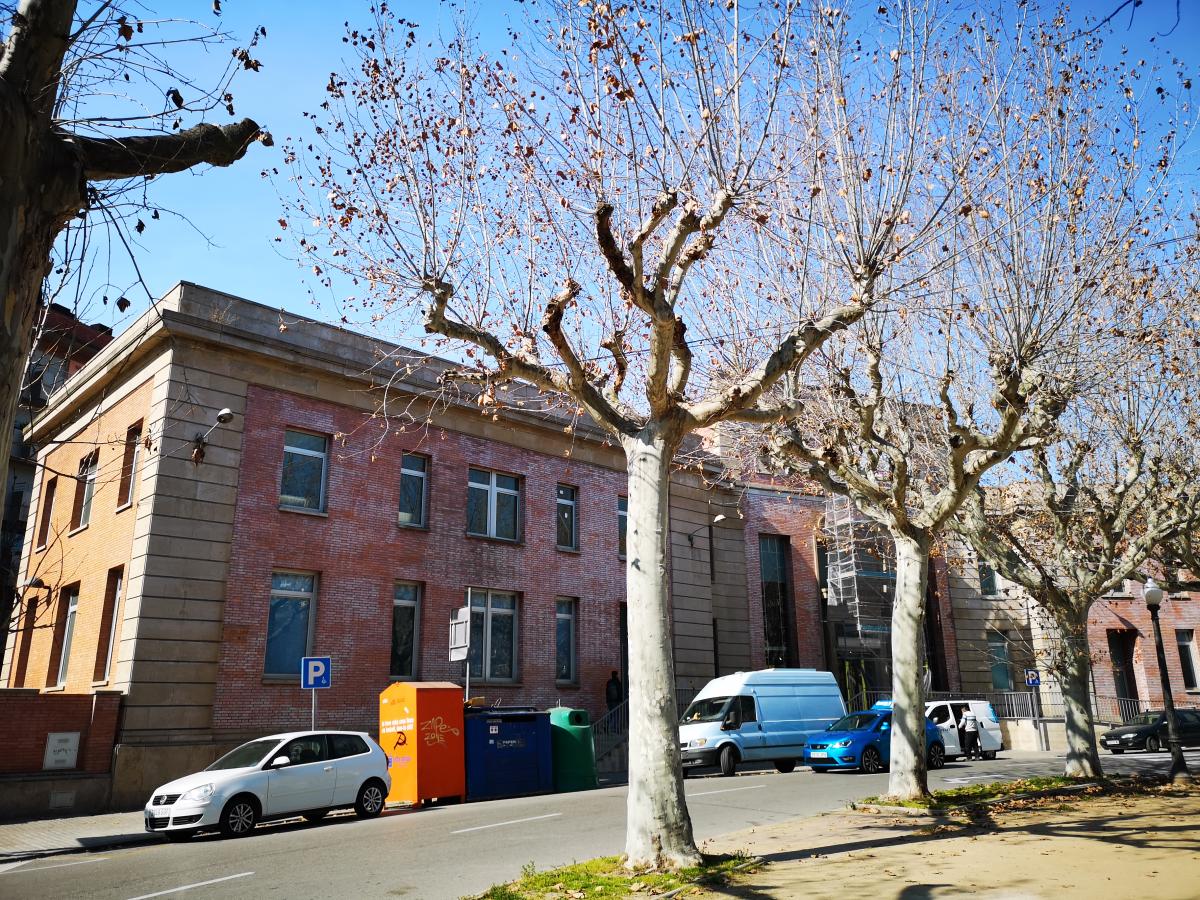
Typology/Elements
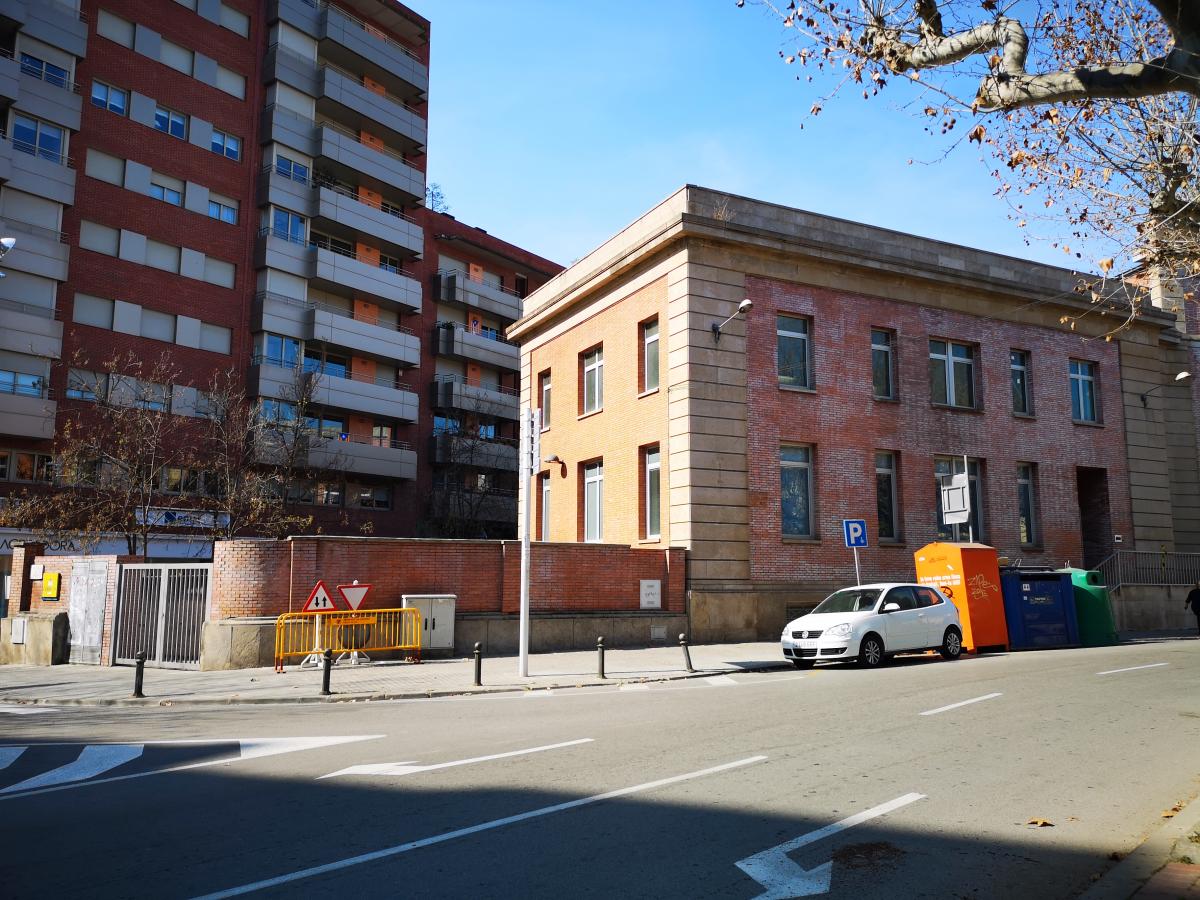
A set of three buildings that form an irregular block with five corners between Maurici Serrahima, Josep M. Planes streets and Espanya square. The building facing the square has a basement, ground floor and 1 or 2 floors; the building located to the north is G+1 and the rear building located to the east is G. The complex resolves up to five corners, preferably at right angles, among which stand out the three stepped buildings that make up the south façade on Josep M. Planes street. On the north side, between the two buildings there is a courtyard used for the loading and unloading of goods.
The façades have been resolved with a combination of large stone slabs that simulate well-cut ashlar blocks at the corners and crowning elements, above the cornices, and smooth red brick walls with rectangular openings without decorative elements. On the main façade section there are carved stone coats of arms of Correus and Telègrafs and, until recently, the coat of arms with the Francoist imperial eagle, which is currently located in the Manresa Regional Museum.
The interior space behind this façade is a single storey but of great height (higher than that of a G+1) and is one of the most characteristic elements of the complex. The building has recently been rehabilitated and modified, so the offices of a P1 that were around this central space have been bricked up. The openings of this space, which is the public service area, are formed by three large smooth rectangular windows, the middle one larger, in which the main entrance is incorporated, also resolved with stone slabs. The style of the façades and the volumetry in general are typical of modern fascist-style architecture that was applied to official buildings throughout Spain at that time, among which the monumental Nuevos Ministerios complex on Madrid's Castellana stands out.